

Traditional SEO was built for a world of blue links, keyword queries, and ten results on a page. In the current SEO vs AI Search Era, people increasingly ask AI assistants for direct answers instead of scanning search result pages. The interface has changed from lists of links to conversational, synthesized responses.
This means your brand’s visibility is no longer decided only by ranking signals inside one search engine. It is also decided by how well AI systems understand your expertise, trust your content, and select your brand as part of their final answer. SEO still matters—but it is no longer the whole game.
Traditional SEO vs AI Search: Who Wins the Future?
Traditional SEO focuses on making your pages more visible to search engine crawlers and ranking algorithms. The goal is clear: appear as high as possible when a user types a query. On-page optimization, backlinks, technical health, and content depth all remain essential.
AI search works differently. Instead of simply retrieving and ranking documents, AI systems interpret intent, synthesize content from many sources, and present a single, coherent response. The “winner” is not just the page ranked #1, but the set of sources the AI decides to quote, trust, and compress into a short answer. In this new landscape, the brands that win are those that perform well in both worlds: they rank in conventional search and are chosen as reliable sources for AI answers.”SEO vs AI Search”

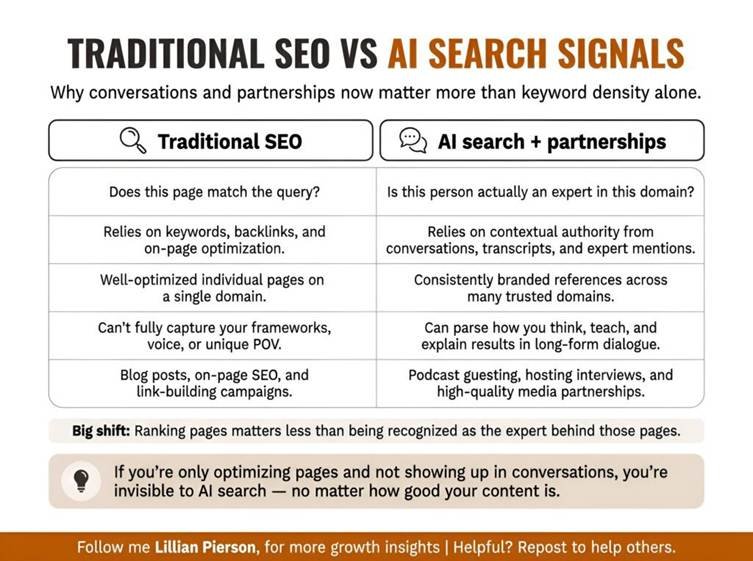
SEO Alone Won’t Save You in the AI Search Era, SEO vs AI Search
Relying on SEO alone is risky in an AI‑first future. You could hold solid rankings yet watch traffic flatten or decline because users never click beyond the AI‑generated explanation. When the answer is fully or mostly visible above the fold, the incentive to “visit site” shrinks dramatically.
What really matters is whether AI systems treat your content as part of the answer. If you are not being summarized, cited, or referenced, your visibility will quietly erode even while your traditional metrics look acceptable. To survive and grow, brands must adapt to a world where optimization is about both ranking and being selected by AI.
Search Has Shifted from Keywords to Knowledge: SEO vs AI Search
In the early SEO era, keywords were everything. You researched phrases, matched them in titles and headings, and tuned pages to those exact terms. Today, the engines powering the SEO shift AI Search Era operate on entities, topics, and relationships rather than simple keyword strings.
AI models and modern search systems map your content into a web of knowledge: who you are, what you do, which problems you solve, and how those ideas relate to broader concepts. It is less about repeating a phrase and more about demonstrating topical depth, clarity, and consistency. The brands that organize their websites around well‑defined topics and entities, rather than scattered keywords, become easier for AI to understand and reuse.

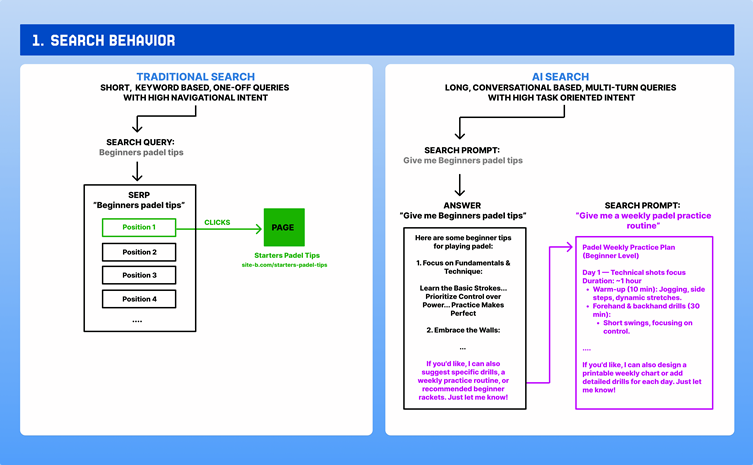
How AI Search Engines Decide Who Gets Visibility
AI search engines make visibility decisions in several layers:
- Understanding intent
AI first interprets what the user really wants—tutorial, comparison, quick fact, strategy, or purchase guidance. That intent can be broader than the literal text the user typed or spoke. - Selecting trustworthy sources
From there, the system chooses a small set of sources that look credible, up‑to‑date, and authoritative. Factors include topical depth, consistency across the web, author profiles, reviews, and signals of real‑world expertise. - Extracting answer‑ready segments
Instead of reading your entire page, AI engines pull specific paragraphs, lists, tables, and definitions that fit the intent. Clean structure and concise explanations make it much easier for your content to be chosen. - Synthesizing and citing
Finally, AI blends those segments into a unified answer, sometimes with a short list of links, sometimes with minimal attribution. The better your content is designed for extraction and synthesis, the more often it appears inside those responses.
Visibility, in this environment, is not only a matter of “rank” but of “inclusion”—are you present inside the answer that users actually read?
How SEO vs AI Search Engines Decide Who Gets Visibility
AI search engines decide visibility based on authority, relevance, structure, and credibility—not just links. Factors include E-E-A-T, content freshness, and how well your material answers queries directly.
Enterprises win by being recognized as authoritative across search and AI systems. Users can toggle between links and AI summaries, but proprietary crawlers prioritize structured, helpful content. AI visibility means being cited, not just ranked—tools like ChatGPT favor credible sources.
To boost visibility, optimize for structure (headings, lists), clarity, and helpfulness. Core factors: authority, relevance, freshness, user signals, and technical accessibility. Track with tools like Local Falcon for AI overviews across platforms. Bing’s signals show citations as the new click metric.
Here’s an illustration of key visibility factors:


How to measure and maximize visibility in AI search: SEO vs AI Search
How Brands Will Be Discovered in an AI‑First World
In an AI‑first world, discovery happens in multiple, overlapping layers:
- People ask AI assistants open‑ended, conversational questions and receive summaries with a few brand examples.
- They refine the conversation, asking for “best for beginners,” “budget options,” or “solutions in my region,” further narrowing which brands appear.
- They click through only when they are ready to compare details, sign up, or purchase.
Your brand is discovered not just because it ranks, but because AI tools repeatedly introduce it as a relevant, trustworthy solution. “SEO vs AI Search” That requires content that clearly answers questions, aligns with specific use cases, and signals who your product or service is actually for. In effect, AI assistants become a new kind of recommendation engine—and you need to earn their confidence.
If Google Disappears Tomorrow, Would Your Brand Survive?
This thought experiment reveals how dependent many businesses are on a single channel. If all traditional search traffic vanished overnight, would customers still know how to find you? Would your brand be discoverable through AI assistants, social platforms, communities, newsletters, and direct referrals?
A resilient brand in the SEO shift AI Search Era does three things:
- Builds recognizable authority in one or more clear niches, so that people search for the brand name itself, not only generic keywords.
- Creates content and experiences that are valuable enough to be referenced by others—articles, podcasts, tools, or datasets that people naturally talk about and link to.
- Ensures that brand information is consistent and structured across the web so AI systems can confidently surface it, even when traditional search interfaces change.
The more your brand behaves like an enduring entity—known, cited, discussed—the less fragile it becomes in the face of platform shifts.
The New Funnel: SEO → GEO → AEO
To adapt, it helps to think of optimization as a funnel composed of three layers: SEO, GEO, and AEO.
SEO: Be discoverable
This is the foundation. You still need:
- technically sound pages that load quickly and can be crawled
- well‑researched topics and clusters aligned with your audience’s problems
- high‑quality, human‑written content that demonstrates expertise and experience
- a healthy ecosystem of backlinks and brand mentions
Without this base, it is difficult for any system—human or machine—to recognize your authority.
GEO (Generative Engine Optimization): Be citable
GEO focuses on training AI engines to treat your content as a reliable ingredient in their answers. That means:
- organizing information around entities (people, products, use cases, locations) and clearly defined relationships
- using structured data and consistent labeling so machines can parse who does what and for whom
- publishing definitive resources—guides, FAQs, original research—that answer core questions comprehensively
- maintaining coherent, up‑to‑date information about your brand across your website, profiles, and directories
When you practice GEO well, AI systems are more likely to pull your content whenever they assemble an answer on your topic.
AEO (Answer Engine Optimization): Be the answer
AEO is about shaping your content so it can appear as a direct, ready‑to‑use answer in featured snippets, AI cards, and conversational replies. To do this:
- Lead with clear, short answers at the top of sections before diving into detail.
- Use question‑style headings that match how users actually ask.
- Structure content in blocks—bullets, numbered steps, tables—that can be extracted without losing meaning.
- Include concise definitions, pros/cons, and “bottom‑line” summaries for each key idea.
A simple way to remember the funnel is: SEO makes you visible, GEO makes you quotable, AEO makes you unforgettable.

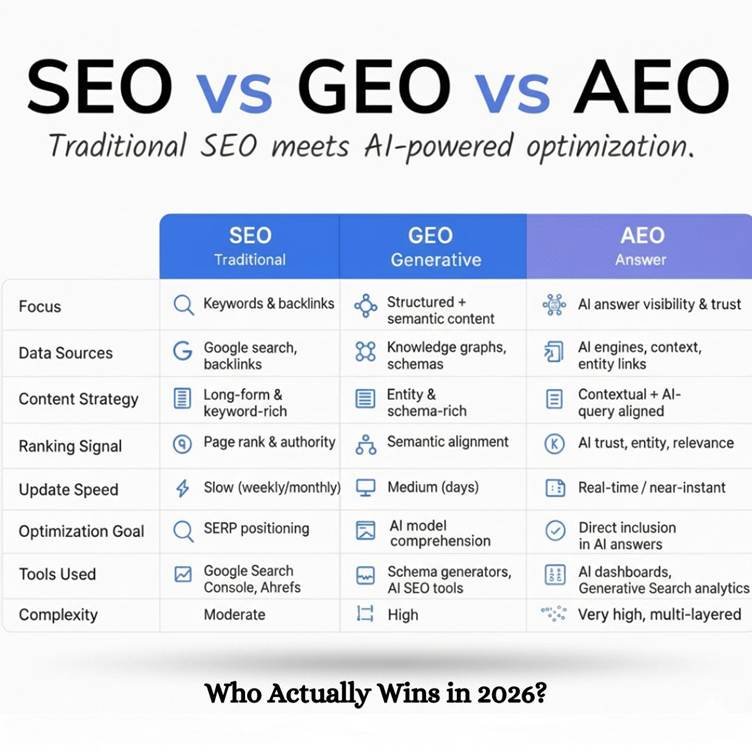
Why AI Search Optimization Is the New Competitive Advantage: SEO vs AI Search
As more people live inside AI‑driven interfaces, AI search optimization becomes a core competitive edge rather than a nice‑to‑have experiment. When competitors still focus exclusively on traditional rankings, you can gain disproportionate visibility by:
- appearing in AI summaries where they are absent
- being suggested as a brand option in niche scenarios and long‑tail queries
- owning a larger share of voice in conversational search around your category
The advantage compounds over time. Every appearance in an AI answer introduces your brand to more people, generates more branded searches, earns more citations, and strengthens your overall authority. The earlier you start optimizing for this environment, the harder it becomes for slower competitors to catch up.
How to Optimize for the SEO Shift AI Search Era: SEO vs AI Search
To translate all of this into an actionable roadmap, focus on a few practical moves.
- Reframe your keyword strategy around questions and topics
Map each major topic to the real questions your audience asks: “how,” “why,” “which is best,” “cost,” “alternatives,” “step‑by‑step.” Build robust, interlinked hubs of content that cover these questions with depth and clarity. - Make every key page answer‑centric
Start important articles with a direct answer paragraph and a short list of key takeaways. Treat the rest of the page as supporting context, evidence, and nuance. - Strengthen your entities and authors
Ensure your brand, products, and key people have clear profiles with consistent descriptions, photos, and roles. Link author bios to their best content, talks, and case studies to show real‑world experience. - Use structured data to talk to machines
Implement schema for organization, product, FAQ, how‑to, reviews, and articles where relevant. Think of structured data as subtitles for AI: it explains in machine‑readable language what your content represents. - Produce “source of truth” assets
At least once or twice per quarter, create cornerstone content: original research, benchmark reports, ultimate guides, or comparison frameworks. These assets can become primary references for AI systems and humans alike. - Monitor your presence beyond traditional rankings
Regularly test your most important queries in AI assistants, voice interfaces, and AI‑enhanced search experiences. Note where you appear, how you are described, and which competitors are being suggested instead of you. - Blend human creativity with AI assistance
Use AI to help brainstorm outlines, identify gaps, and rephrase complex ideas, but keep humans firmly in charge of strategy, narrative, and final edits. This combination gives you both speed and authenticity.
Content Strategy for AI Visibility:
- Become the Cited Authority – Create definitive guides on topics like “SEO vs GEO vs AEO comparison,” “AI search optimization checklist for 2025,” or “How businesses should adapt to AI search.” These comprehensive resources are exactly what AI tools cite.
- Thought Leadership Content – Publish original research, case studies with real data, industry trend analyses, and expert predictions. AI systems heavily favor content that presents unique insights rather than rehashed information.
- Problem-Solution Framework – Structure content around specific client pain points: “Why is my website traffic dropping in 2025?”, “How to get featured in ChatGPT responses,” “What metrics matter in AI search era.” Answer these comprehensively.
Engagement & Distribution:
- LinkedIn Strategy – Share bite-sized insights from your longer content, engage in conversations about AI search trends, and position your agency as forward-thinking. LinkedIn is crucial for B2B visibility.
- Video & Visual Content – Create explainer videos (like the concept in your image), infographics breaking down complex topics, and short-form content for social. This increases shareability and reach.
- Email Newsletter – Build a list of people interested in staying ahead of digital marketing trends. Share your best insights regularly.
- Community Engagement – Comment on industry discussions, answer questions in relevant forums/groups, and collaborate with other marketing professionals.
Technical Optimization for Your Site:
- Let me check your current site to give specific recommendations…
- Would you like me to analyze businesspromotion24.com and provide specific technical and content recommendations based on what I find?
Closing Perspective: Winning the Future of Search
The future of search will not crown a single winner between traditional SEO and AI search. Both will coexist, and users will move fluidly between classic SERPs, AI overviews, and conversational assistants. The real contest is between brands that cling to a one‑dimensional playbook and brands that embrace the full SEO shift AI Search Era.
If your strategy evolves from SEO alone to a layered approach—SEO for discovery, GEO for citations, and AEO for direct answers—you position your brand to be found, trusted, and chosen in whatever interface comes next. In that world, you are not just chasing algorithms; you are building durable visibility in the minds of both humans and machines. I’ve profitable, affordable digital marketing services for you. Give me a chance to grow your online business. Let me know, and click here to call back